
Sett: The Hybrid Identity of the Beast-Boy-Bastard
Migration and Hybrid Identities
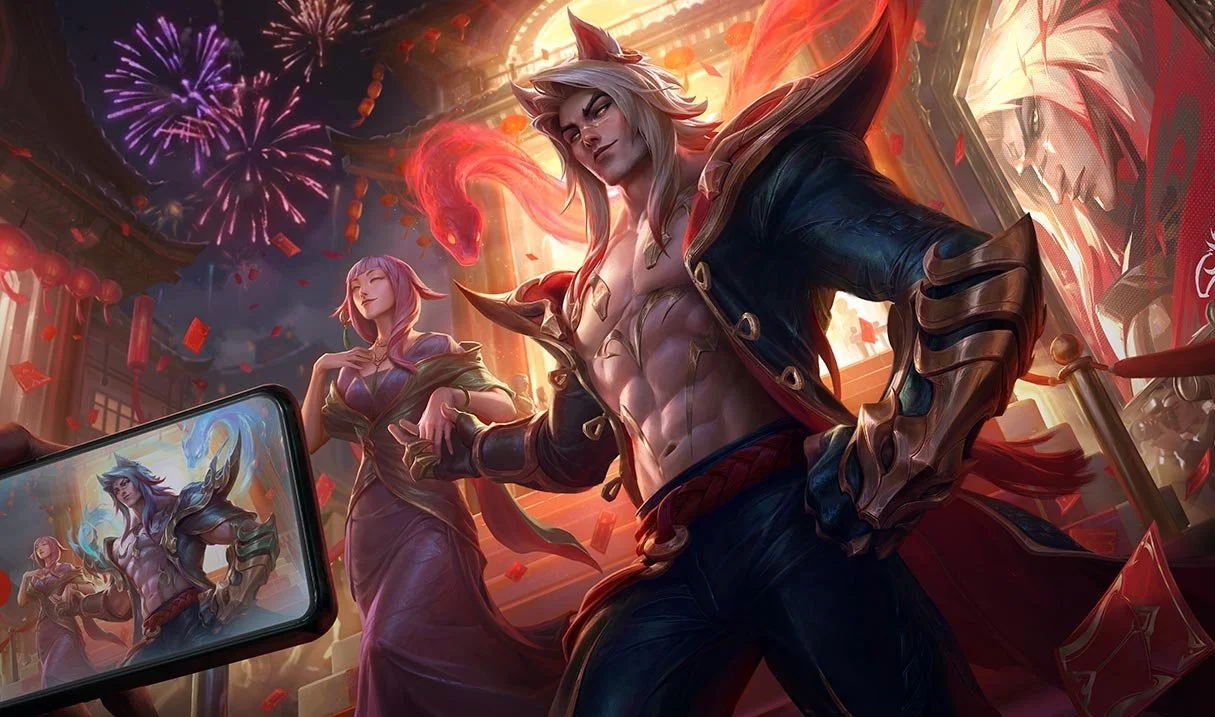
Radiant Serpent Sett and his mother (left). Copyright Riot Games.
"Okay, everyone here knows how to throw a punch, right? 'Cause I don't have time for lessons". - one of Sett’s first-move quotes.
Settrigh, or more commonly known as Sett, is a human and vastaya hybrid from Ionia who operates a pitfighting ring in Ionia, having made his way up the ranks from a nobody to arguably one of the region’s most famous. However, his story did not start out with the glitz and glamor of being someone who is now known as ‘The Boss’.
Sett was born in Navori, Ionia to a human father and a vastaya mother out of wedlock. Due to this, he and his mother were expelled from their vastaya community and went on to live in a society of humans, who were still apprehensive of his taboo existence, yet due to his father’s reputation as one of the greatest pit fighters in Ionia, they never expressed their disapproval. However, once the man disappeared, this disapproval was finally expressed and he was bullied simply for being himself. This relentless bullying led him to learn to fight back, sneaking out at night to fight in the pits where his father made a name for himself, and ultimately, he rose through the ranks quite quickly. And thus, in the present day, the man known as ‘the Beast-Boy-Bastard’ finally became the one controlling the pits, earning riches beyond his wildest imaginations and giving a better life to his beloved mother.
The struggles Sett fought early in life: ostracism, abandonment, and discrimination, are commonly found in people with hybrid and/or migrant identities. In the real world, we can, for example, take the example of someone with a European father and an Asian mother (statistically the most common combination in the context of biracial couples). While globalization has made children with hybrid identities more common, there is still an internal struggle in which they identify with one side or the other (i.e., not ‘white’ enough to be European yet not ‘Asian’ enough to be Asian). In addition to his hybrid identity, he also struggles with abandonment as his father left him for richer pastures to gain more money. While his parents are not married or are in a form of civil union in any way, interracial couples in the real world have a higher separation rate, and this led to him having completely differing views on his parents, since in his story and voice lines, he is depicted to have disdain for his father (wanting to confront him for leaving the family) and love his mother so much (in the lore he gave his mother a prosperous life from his fighting escapades and in-game, alongside ‘breaking necks’ and ‘fine Ionian silk’, he refers to his Momma for the ‘things he loves’).
In any case, his hybrid identity has directly or indirectly contributed to Sett’s growth, and the so-called ‘Beast-Boy-Bastard’ is a perfect depiction in which that hybrid existence is not as simple as black or white.
Sett’s Pit - The Third Space
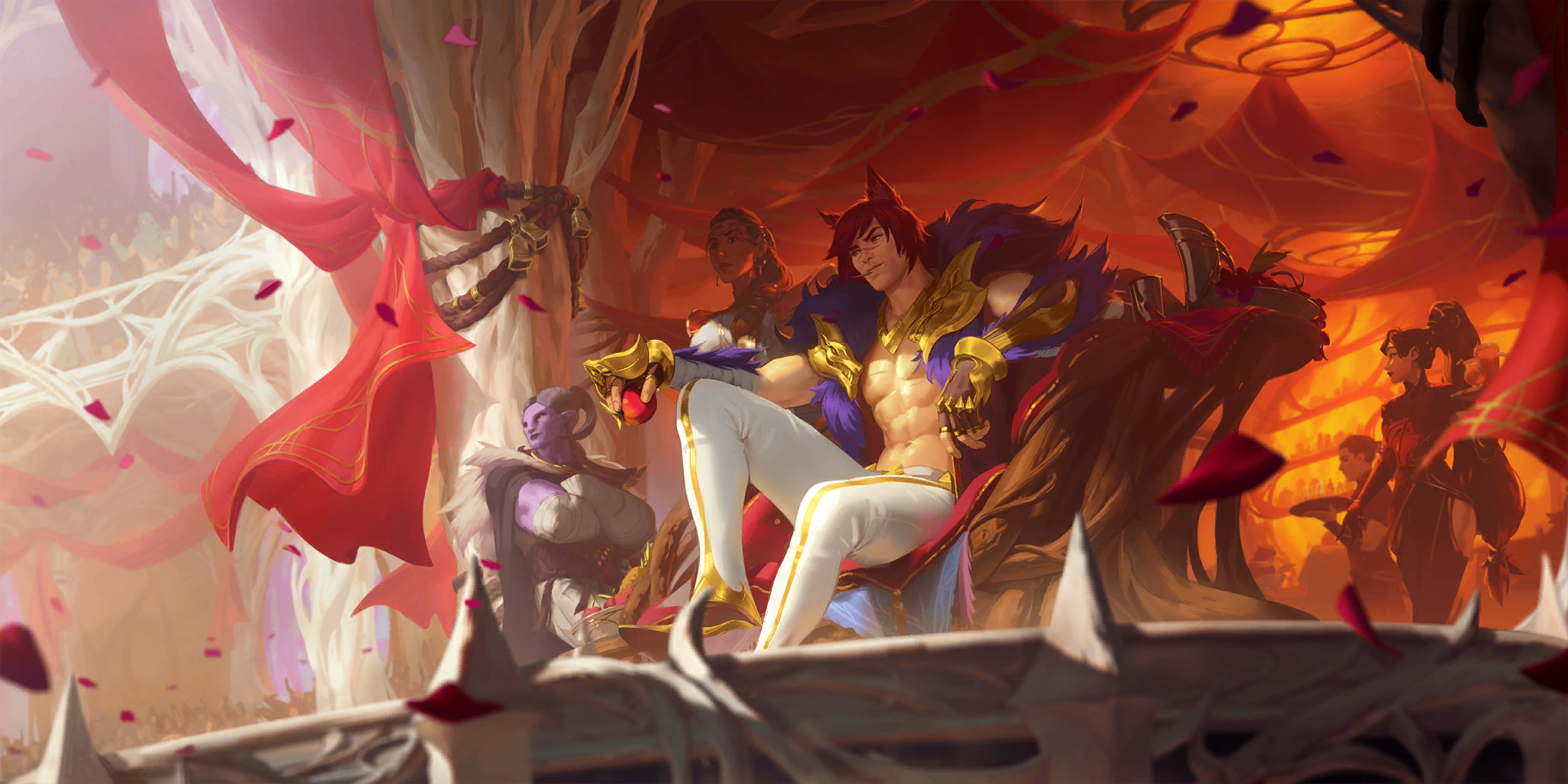
Sett in his pit fighting ring. Copyright Riot Games.
"I don't like hurtin' people. I like the money I get from hurtin' people". - one of Sett’s movement quotes.
Having taken over the pit where he made a name all those years ago, Sett’s fighting arena is the perfect embodiment of his hybrid identity: it is located in Ionia yet takes inspiration from Noxian fighting arenas where ‘survival of the fittest’ is the modus operandi, with the Reckoning being the most prominent of them all (other champions such as Xin Zhao, Alistar, and Rell fought there according to Noxian narratives). Here, Sett provides, being the one setting the rules as well as obtaining the most money from fights in the ring. He still fights in them, though probably not with the frequency of his youthful self.
The hybrid identity of his fighting arena also represents what Homi Bhabha calls a ‘third space’. The term can be interpreted in many different ways, such as in the context of social life as the place that is not your home or workplace, such as a coffee shop or bar where you frequent with your friends or family. However, in the context of Sett, this ‘third space’ is defined as a place where cultures meet: being located in Ionia, it will be geared towards Ionians, yet it applies the pit fighting rules found mostly in Noxus. This way, Sett is able to express his hybrid identity in his own fighting arena.
In addition to the expression of hybrid identity, the pit also provides him with the riches that come with holding a fighting arena with such a reputation. Over the years, Sett has built a reputation of being a violent, no-holds-barred fighter that also provides a spectacle for the audience, and after learning about the secrets of holding fighting competitions in his youth (identifying the notion that the riches are made organizing fights rather than fighting in them), he eventually used his earnings to take over the pit he used to fight in (defeating every single one of his opponents easily).
Another perspective we can take about the pit is that it is a reflection of Sett’s own childhood and ostracization as the ‘beast-boy-bastard’. In his arena, identities are irrelevant and those who fight are measured by their strength. This ultimately refers to the motto of the Noxian Empire (where Sett’s father is from) where those who have strength can make it to the top, irrespective of their origin, which is ironic considering Sett hates his father. This way, he indirectly ‘represents’ the identity of his estranged father in a way that only he knows how, and the third space he created for himself (and other fighters) became a reflection of the principles of his father’s homeland and his mother’s origin.
The Question of Origin
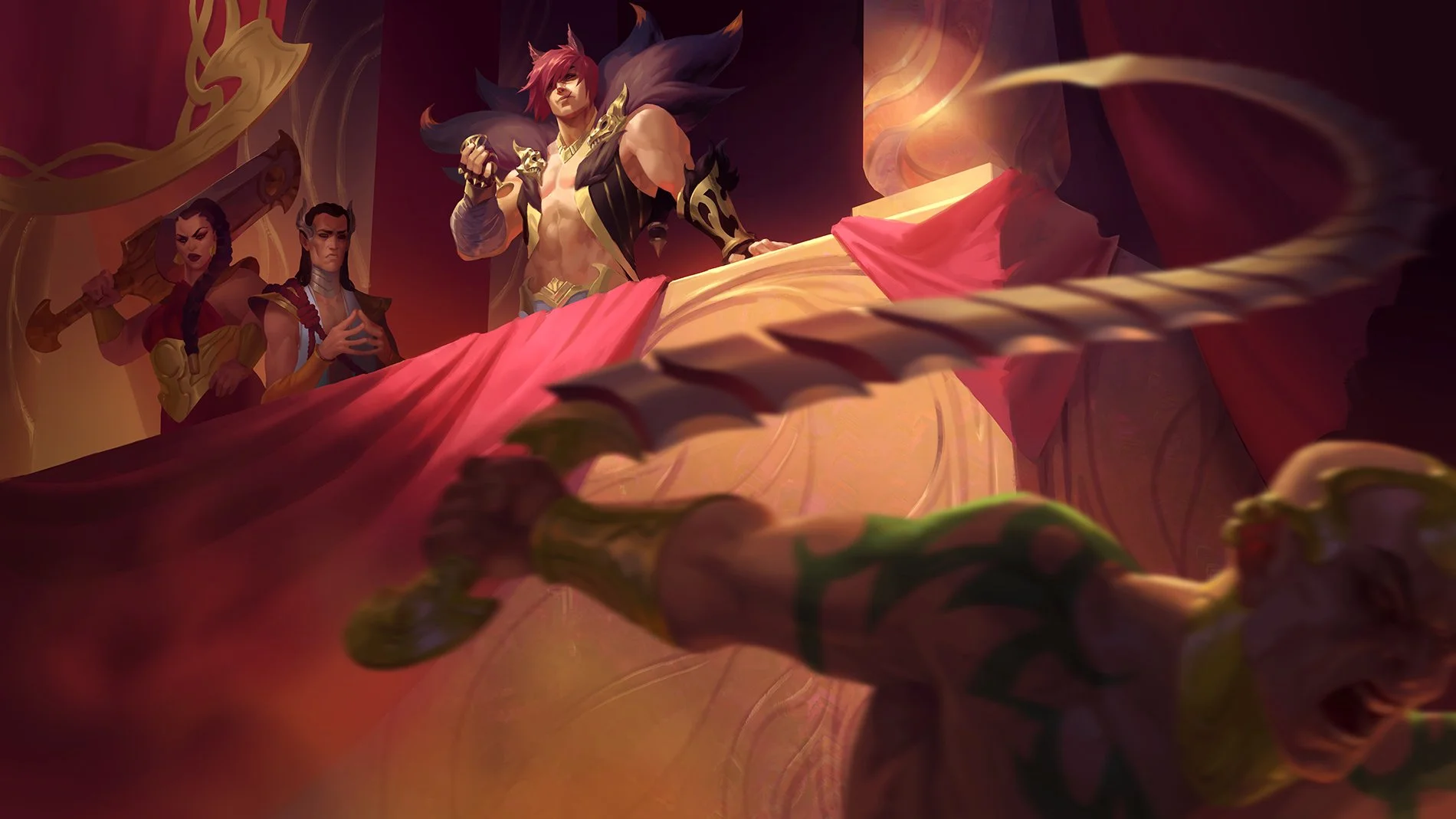
Sett as depicted in the story, Big Head, Bad News. Copyright Riot Games.
"You're about to see my human side—the part that ain't so nice". - Sett’s quote when encountering another vastaya.
The anchor of Sett’s lore is confronting his father for leaving him and his mother at a young age. In his youth, he learned that he did not disappear or die, but rather bought out his contract in the fighting arena to travel the world for more profitable opportunities, and thus the abandonment was deliberate. Ironically, Sett reflects the development of his father in this case, as his pursuit to becoming ‘the Boss’ ultimately led to a path of violence and crime, even though he himself is not an ‘evil’ person, per se.
It is depicted in the lore that Sett’s ‘main’ goal is to confront his father for leaving him and his mother, and should the confrontation come into fruition, it might not be in the way he expects it to be. There is a plethora of possibilities when it comes to confronting his father (who is implied to be the Old Timer in Legends of Runeterra), one of which might involve a duel in the arena he built (narratively this makes sense, should he hear the news of Sett’s fighting arena being one of the most infamous in Ionia’s underworld) or in an event that involves Sett’s mother.
Sett hating his father is developing into something of an irony due to his current escapades, but based on Bhabha’s concept of colonial mimicry (the ‘colonized subject’ becomes more and more similar to the ‘colonizer’). While him unintentionally copying his father is not ‘colonial’ in the traditional sense, the structure is almost identical, wherein he reproduces his father’s pitfighting career so completely that he surpasses him (his father continues to find avenues to fight for a living, Sett completed it and became more than just a fighter), which makes the unintentional mimicry all the more ironic and menacing.
Finally, we can trace Sett’s struggles and development to Paul Ricoeur’s narrative identity. He explained that we understand who we are by the stories we tell about ourselves. Here, Sett has a problem in which his narrative has a gap, which was opened by the absence of his father, and regardless of how much money he earns from his arena or the quality of life he provides his mother, he cannot permanently close it unless he confronts his estranged father. As explained above, his father’s absence is his narrative anchor, which is why ultimately closing the gap is essential for his character development and freeing the shackles that ‘force’ him to fight all the time. To conclude this essay, one might say that the fist that built everything is still underneath the fist of a boy looking for someone who chose not to stay.
If Sett’s story is about what happens when the world refuses to make room for you, the next one asks a harder question: what happens when the world that made room for you is simply gone?
Further reading
Stuart Hall - Cultural Identity and Diaspora
Homi Bhabha - Third Space Theory
Paul Ricoeur - The Concept of Narrative Identity
Victor Turner - Liminality and Communitas